Art Is Inefficient, And We Need It
Why the need for art is more prevalent in a technical world.
6/6/20263 min read
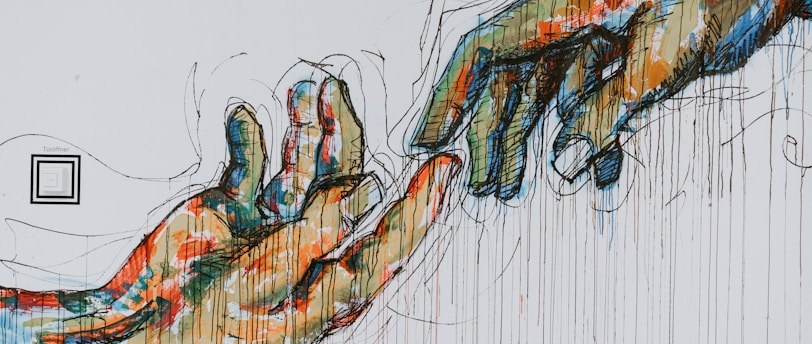
We live in a society where technical skills take precedence over emotional and reflective understanding, because societal interest lies in technological progress. Innovation dominates public attention: artificial intelligence, automation, faster systems, smarter devices, endless optimization. Progress is often measured by efficiency, productivity, and measurable output. In many ways, this focus has improved the quality of life. Compared to previous centuries, many people today possess legal rights and opportunities that once seemed impossible. However, as we learn about all the progress we have made as a civilization—particularly in the West—, we fall under the illusion that there is nothing left to learn about the human being.
But the fact still remains that there is much more to learn and understand about the human being and his relation to himself, his relationships to others, and his perspectives dictated by his unique observations and experiences. Meaning, there is much more nuance to being in a toxic relationship, having competing identities, fighting for your life or prosperity in a hopeless situation, or even being privileged yet unhappy than what could be understood through academic text. It is through expression—primarily through literature, visual art, and the spoken word—that these nuances can be understood.
A common criticism of art, particularly art that is abstract or emotionally driven, is its apparent lack of utility. “What is the point?” What benefit is there to understand something that may never concern us? What need is there to dissect a logically avoidable state or situation when it only causes inconvenience? Why make logic out of the illogical?
We pursue technological advancement to save time, reduce labor, and improve convenience. We organize societies around productivity because efficiency creates opportunity. Yet the value of time only exists because of what we choose to fill it with: relationships, communities, passions, conversations, memory, meaning. Even the systems built around optimization ultimately exist to serve human life, and human life is fundamentally relational. People seek understanding from one another despite how complicated, vulnerable, and inefficient that process can be.
Many would argue that it is one’s religious duty to serve or it’s in your best interest to cooperate for professional goals, but either way, one has no choice but to interact and understand their peers to some extent to maximize quality of life.
Alright, but why art? Why literature? Especially for work that is too abstract for many audiences? Connection is often something that is felt more than understood. The psychology behind a color palette, or the rhythm of a sentence is enough to form sentiment; and a lot of the time, that is sufficient. The anger, luck, or goriness of red; the rapt passionate or desperate lines of a spoken word; the heartbeat of a tune—they all share subjective value. Art is used for resilience, rebellion, self-expression, and even education, and without monetary or material benefit, a work’s value is in one’s sentiment for it.
Sentiment is what drives support for a political piece, fosters a willingness to empathize with a personal work, or even create an interest in what the subject matter has to teach. In other words, it connects people beyond material gain through the unavoidable, emotional aspects of the human being. If a novel can put a child inside the mind of a struggling parent, an essay put the privileged in the shoes of a refugee, or a painting make sense of an onlooker’s trauma, then how can we say that art isn’t necessary? It, in its own way, also drives the political, interpersonal, and even scientific advancements that could improve the quality of life.
Value, then, cannot be measured by efficiency alone.
Convenience does not guarantee fulfillment, and success does not eliminate loneliness. Many financially stable or outwardly privileged people live miserably, often because of the isolation of their positions. If simply encountering another person’s perspective—seeing proof that your experiences are shared, or being forced to confront discomfort outside your own worldview—would give us depth as individuals, then inefficiency is not always something to overcome, but sometimes the very thing that gives life meaning.